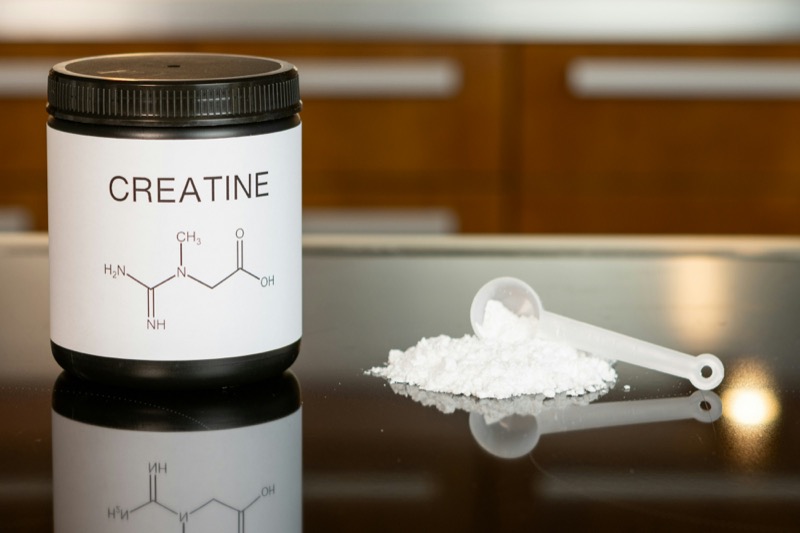
Creatine is one of the most researched and effective supplements on the market. Yet despite decades of studies proving its safety and effectiveness, many people still have questions about how to use it properly. This guide covers everything you need to know about creatine: types, dosages, timing, and how to track your progress.
What is Creatine?
Creatine is a naturally occurring compound found in muscle cells and the brain. It plays a critical role in energy production by helping regenerate ATP—the primary energy currency in your cells.
Your body produces about 1-2 grams of creatine daily from amino acids, and you consume additional amounts from meat and fish. However, dietary sources don't always provide enough creatine to maximize athletic performance and muscle growth.
Supplementing with creatine increases muscle creatine stores, which improves:
- Strength: More ATP available means more power during high-intensity efforts
- Muscle growth: Better training performance leads to more muscle stimulation
- Recovery: Improved ATP regeneration speeds muscle repair
- Endurance: Some studies show improved performance in repeated high-intensity efforts
- Brain health: Creatine supports cognitive function and may help with depression
Pro tip: Creatine is safe. Decades of research with thousands of participants show no health risks at recommended doses. Despite myths, creatine does not harm kidneys, cause dehydration, or lead to hair loss.
Creatine Types Comparison
Creatine Monohydrate (The Gold Standard)
Cost: $ (Cheapest) | Effectiveness: ★★★★★ | Research: ★★★★★
Creatine monohydrate is the most researched form with the most evidence supporting its effectiveness. It's also the cheapest option.
- 5-10 grams per day is standard dosing
- Mixability: Some people report it doesn't dissolve perfectly (micronized versions help)
- Timing: Can be taken anytime—consistency matters more than timing
- Best for: Everyone, but especially cost-conscious lifters
Creatine HCL (Hydrochloride)
Cost: $$ | Effectiveness: ★★★★ | Research: ★★★
Creatine HCL is more easily absorbed than monohydrate, meaning you need less.
- 2-3 grams per day is typical dosing (50% of monohydrate dose)
- Mixability: Dissolves better than monohydrate
- Side effects: Slightly fewer GI issues for some people
- Best for: People with sensitive stomachs or those wanting lower doses
Creatine Ethyl Ester
Cost: $$$ | Effectiveness: ★★★ | Research: ★★
Marketed as more absorbable than monohydrate, but research doesn't strongly support this claim.
- Better absorbed than monohydrate in theory, but real-world results are mixed
- Higher cost without proven better results
- Best for: People who didn't respond well to monohydrate and want to try alternatives
Buffered Creatine (Kre-Alkalyn)
Cost: $$$ | Effectiveness: ★★★ | Research: ★★
Buffered creatine is designed to survive stomach acid better. Results are mixed.
- Similar effectiveness to monohydrate in most studies
- Significantly more expensive
- Best for: People who prefer trying different forms
Optimal Dosing Protocol
Option 1: Loading + Maintenance (Faster Results)
Loading Phase (5-7 days): 20 grams per day (divided into 4 doses of 5g)
Maintenance Phase (ongoing): 5 grams per day
Results: Muscle saturation in 5-7 days
Pro tip: If doing loading phase, take with carbs and protein. The insulin spike helps creatine absorption.
Option 2: No Loading (Slower but Simpler)
Daily dose: 5-10 grams per day, consistently
Results: Muscle saturation in 3-4 weeks (slower than loading, but easier to stick with)
Best approach? For most people, skip loading and just take 5-10g daily. It's simpler, and results are only delayed by a few weeks.
When to Take Creatine
Timing matters less than consistency, but here's what the research shows:
- Post-workout with carbs + protein: Slightly better absorption due to insulin spike
- With food: Better than on empty stomach
- Same time daily: More important than specific timing
- Morning or evening?: Doesn't matter
Bottom line: Take creatine with a meal containing carbs and protein (breakfast, lunch, or post-workout). Consistency for 4-6 weeks matters far more than perfect timing.
Side Effects & Safety
Creatine is one of the safest supplements available. Here's the reality on common concerns:
- Kidney damage: No evidence. Even in people with existing kidney disease, properly dosed creatine is safe
- Hair loss: One study linked it to increased DHT, but most follow-up research shows no effect
- Water retention: Yes, but it's intramuscular (inside muscles), not subcutaneous. You look fuller, not bloated
- GI issues: Some people experience mild digestion issues. HCL form or taking with food helps
- Dehydration: No evidence. Drink normally
How to Track Creatine in SuppaLog
Use SuppaLog to maintain consistency with your creatine supplementation:
- Scan the label: Use AI Vision to extract exact dosage from your creatine container
- Set daily reminders: Schedule creatine at optimal time (post-workout or with breakfast)
- Track intake: Log daily creatine consumption and monitor your streak
- Monitor progress: Record your strength gains and muscle measurements
- Consistency tracker: See your creatine adherence over weeks (consistency = results)
Bottom Line: Creatine 101
Creatine is safe, effective, and affordable. It's one of the few supplements with decades of research proving consistent results.
The optimal protocol:
- Choose creatine monohydrate (cheapest and most researched)
- Take 5-10 grams daily with a meal containing carbs and protein
- Stay consistent for 4-6 weeks
- Expect: +2-3% strength improvement, +1-2 lbs muscle over 8-12 weeks
- Track in SuppaLog to maintain consistency
That's it. The type matters less than consistency. The timing matters less than consistency. Creatine is simple—just take it daily and see results.